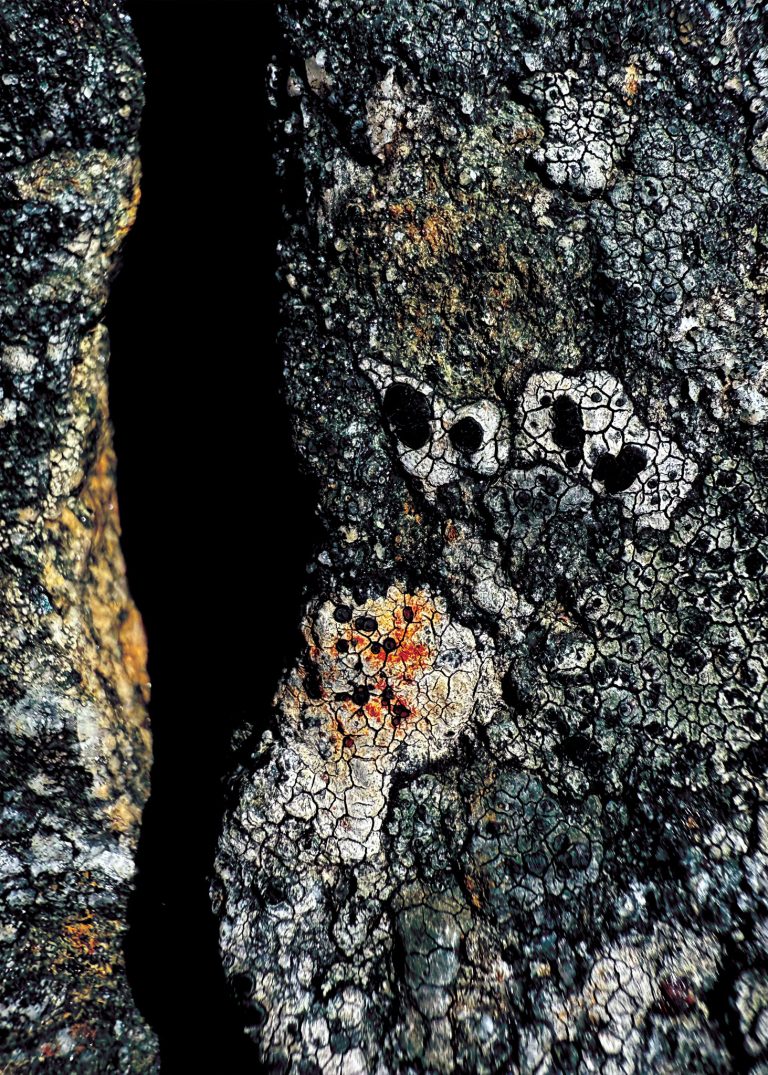
The Compass of Light
“Light is not so much something that reveals as it is itself the revelation.” — James Turrell
The Compass of Light is the operational core of my research. It exists because freedom, without structure, is indistinguishable from noise.
When I began working with digital light, the infinite malleability of the medium presented an immediate methodological risk: without a guiding architecture, a practice risks becoming a series of disconnected gestures — a more complex form of entropy rather than a resistance to it. The Compass was developed as the direct response to this problem. It is a navigational system for decision-making — a map that ensures every intervention is a deliberate act, and that the body of work maintains coherence across time, medium, and scale.
The theoretical framework underpinning it is published in full in the practice-based research paper The Architecture of a Choice (Zenodo, 2025, DOI: 10.5281/zenodo.17507953). What follows is its operational translation.
Why Light
The choice of light as the field of this research is ontological, not aesthetic.
Light is the primary carrier of information about the state of the universe. Every signal we receive — from cosmic background radiation to the photons striking the retina as you read this — is mediated by light. It carries information across space and time, and in doing so, it carries entropy. A photon traveling from the surface of the Sun takes eight minutes and twenty seconds to reach the Earth. In that journey it traverses atmosphere, loses coherence, disperses. When a digital image is compressed, the algorithm discards information — the signal degrades. When a photographic film ages, silver crystals oxidize — the image dissolves physically, subject to the same Second Law that governs all matter.
Light exists simultaneously in the physical world — as radiation, as signal, as information carrier — and in the artistic world, as pixel, as chromatic data, as the raw material of every image. This double existence makes it the ideal field for a practice grounded in thermodynamics: working with light means working at the boundary where a signal struggles against the noise of thermal equilibrium.
The Compass of Light uses this substrate as a concrete, verifiable system for exploring the relationship between order and disorder. Its four archetypes define the four fundamental modes through which light can be engaged — four strategies for imposing, transforming, generating, or documenting coherence against entropy.
The Four Archetypes
The Oracle: Light as Witness
“Photography is the art of frozen time, the ability to store emotion and feelings within a frame.” — Meshack Otieno
Light acts as the primary witness, recording surfaces, material traces, and temporal residues. The Oracle uncovers what is already present, waiting to be seen.
The operational strategy is preservation through stabilization. Intervention is limited to what is methodologically necessary to isolate, clarify, or conserve the light’s inherent significance. The post-production is an act of attention: isolating the signal before it dissolves into the background noise of the room, the day, the moment.
In 820, the series that first activated this archetype, the light documented is already eight minutes and twenty seconds old when it arrives. The Oracle’s gesture is to recognize this — to declare that even the most domestic corner of a room is a landing site for ancient radiation, and that this fact is worth preserving.
The Alchemist: Light as Transformer
“The job of the artist is always to deepen the mystery.” — Francis Bacon
Light functions as an active transformative agent — a reagent that alters the perceived nature of matter. The Alchemist rewrites reality.
The operational strategy is radical reorganization of visual data to manifest light’s transformative potential. Chromatic frequencies are shifted, spectral information is isolated, the familiar is rendered alien. Through this process, light ceases to describe the world and begins to reveal a different version of it — one that was always latent, invisible to ordinary perception.
In Spectral Spring, trees photographed in Venice are translated into impossible chromatic registers. The foliage becomes a glowing apparition against a void. What the Alchemist reveals is a truth about reality: that the ontology of an object is fluid, and that changing the light changes what the object is.
The Demiurge: Light as Creator
“What is now proved was once only imagined.” — William Blake
Light is the generating principle: order constructed ex nihilo through algorithmic rules. The Demiurge activates when there is no external referent — when light itself becomes matter, engine, and law.
The operational strategy is pure construction. A seed image — a photograph of sky, a field of low entropy — is entrusted to a proprietary generative algorithm that applies deterministic rules with probabilistic variations. The system produces hundreds of phenotypes. The negentropic act is the selection: the rigorous filtering of algorithmic noise to isolate the rare moments when the process produces conceptual coherence.
The generative algorithm functions primarily as an entropy generator. The artist intervenes as the external axiom — the only element in the system capable of recognizing when order has emerged and declaring it sufficient to exist. In Genesi, this process produced 14 Progenitors and 30 Hybrids from hundreds of discarded iterations. The work resides in what survived the selection.
The Eschaton: Light as Dissolver
“In the depth of winter, I finally learned that within me there lay an invincible summer.” — Albert Camus
Light acts as the agent of entropic description: used to choreograph the process of signal degradation, form collapse, and dissolution into noise. The Eschaton gives entropy aesthetic form.
The operational strategy is choreographed entropy. The artist shapes the dissolution, imposing a formal dignity on the collapse. This is methodologically the most complex archetype to activate: it requires engaging directly with the fundamental tendency that the entire practice exists to resist, and finding coherence within it rather than against it.
In The Square, digital layering accumulates hundreds of temporal exposures until individual forms dissolve into collective visual noise. The subject is the place — the architectural signal collapsing under anthropogenic pressure. The Eschaton documents this collapse as testimony.
The Open Compass
These four archetypes are operational axes — directions on a map that the work moves between, sometimes occupying more than one simultaneously.
A work can witness a dissolution. A transformation can generate new forms. Creation can document its own collapse. The Compass provides structure without prescribing outcomes, coherence without repetition.
Across a corpus of 1,181 images evaluated against these four archetypes, 57% were excluded as conceptually insufficient — either conceptually mute, failing to activate any archetype, or collapsing into noise. The 43% that survived constitute the active corpus of this research. The exclusion rate is the evidence that the system discriminates, and that discrimination is the work.
One must imagine the artist happy.