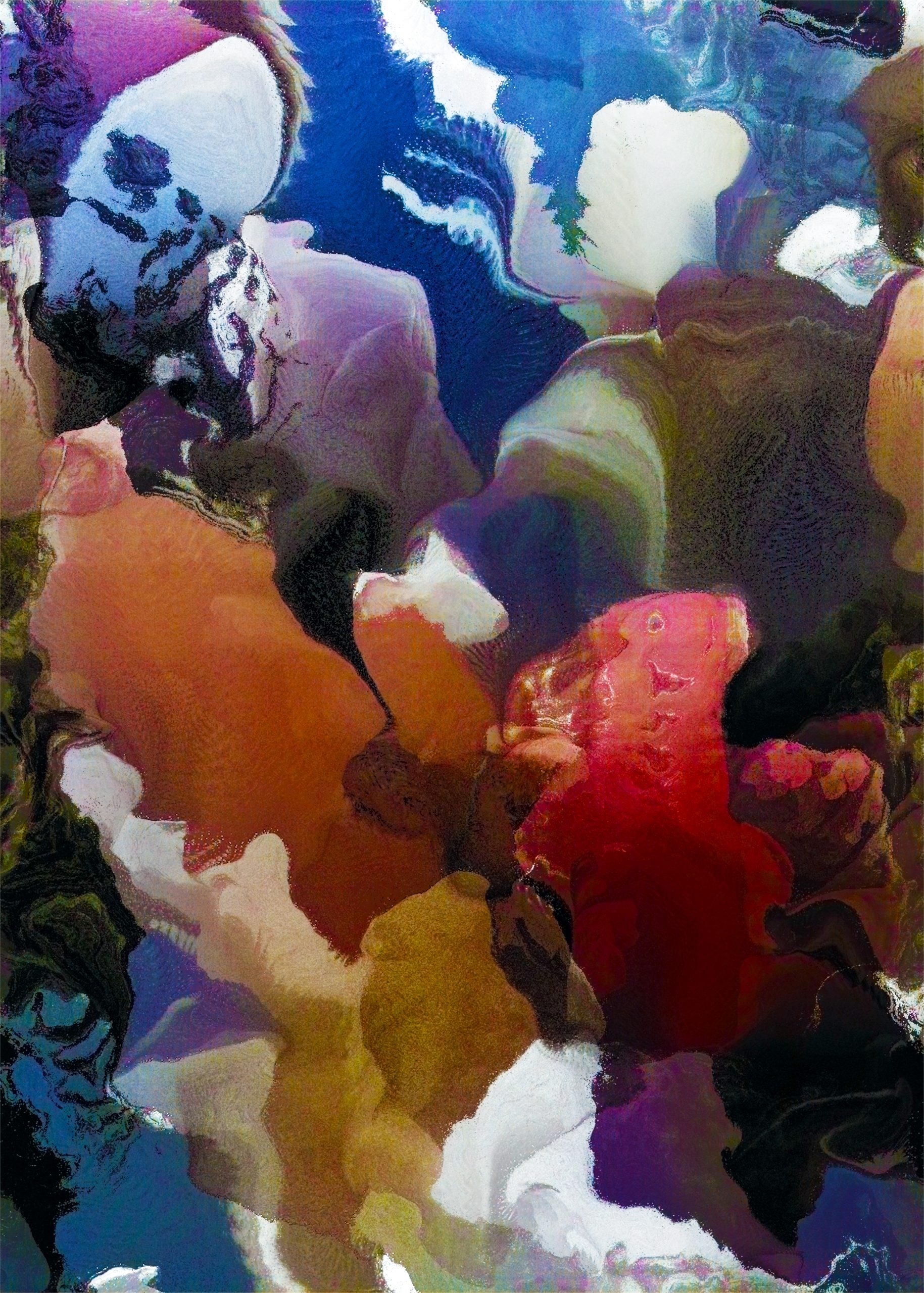
The Incomplete Hybrid: Gödel and the Axiom of Choice
“In any consistent formal system, there are true statements that cannot be proven within the system itself.” — Kurt Gödel
The algorithm is a closed formal system.
It operates according to rules I designed, applies them with mathematical precision, and produces output that is entirely consistent with its own internal logic. It generates hundreds of variations from a single seed. It couples Progenitors to produce Hybrids. It runs without contradiction, without error, without ambiguity.
And it cannot tell me which of its outputs is meaningful.
The Limits of the Formal System
Gödel’s Incompleteness Theorem establishes that in any sufficiently complex formal system, there exist true statements that the system cannot prove using its own rules. The system is consistent — it never contradicts itself — but it is incomplete. Truth exceeds proof.
Applied to Genesi, the consequence is precise: the algorithm can produce Hybrid #8, but it cannot recognize Hybrid #8 as a work of art. For the system, every iteration is an equally valid output — a consistent result of the rules applied to the seed. The machine produces without hierarchy, without preference, without the capacity to distinguish the coherent from the entropic.
This is the incompleteness of the generative system. Not a flaw in the design — a logical necessity. No formal system can validate its own aesthetic truth while remaining confined within its own rules.

No Hybrids have been harmed while writing this post, and Hybrid #8 is beautiful.
The External Axiom
In mathematics, when a system cannot prove a statement it needs, the solution is to introduce an axiom — a truth accepted from outside the system, not derivable from within it.
The artist functions as this axiom.
By stepping outside the algorithm, the artist provides what the system lacks: the judgment that this specific configuration carries weight, that this iteration activates the intended archetype, that this work deserves to exist. The act of selection is the insertion of an external truth into a system that could never generate it internally.
The axiom I introduced is grounded in the Compass of Light — the framework that defines what coherence means, what constitutes a successful activation of an archetype, what separates signal from noise. The selection is principled. But it is external. It could not have come from within the code.
Completing the System
Every Hybrid that enters the active corpus is, in Gödelian terms, a statement that has been proven — not by the system, but by the external axiom of the artist’s judgment. The system produced it. The artist completed it, by declaring it true.
The excluded iterations remain unprovable — consistent with the system’s rules, but never elevated to the status of truth. They constitute the necessary incompleteness of the corpus: the vast field of valid outputs that the system produced and the artist did not complete.
This incompleteness is not failure. It is the structural condition that makes the selection meaningful. A system that validated all its outputs would have no selection — and therefore no art. The incompleteness of the algorithm is what creates the space for the artist to exist.
The Architecture of Completion
Genesi demonstrates that the machine provides the syntax and the artist provides the semantics. Together they constitute a complete system — but only because they are two distinct things. The algorithm alone is incomplete. The artist alone has no material to work with. The work emerges from the combination: a formal system that generates without judgment, and an external axiom that judges without generating.
Hybrids is the proof of this collaboration — the point where the consistency of the algorithm meets the truth of the selection, and something that neither could produce alone becomes real.


