-
-
-
Vasily and Me
There is a room at the Guggenheim in Venice where time stopped for me.
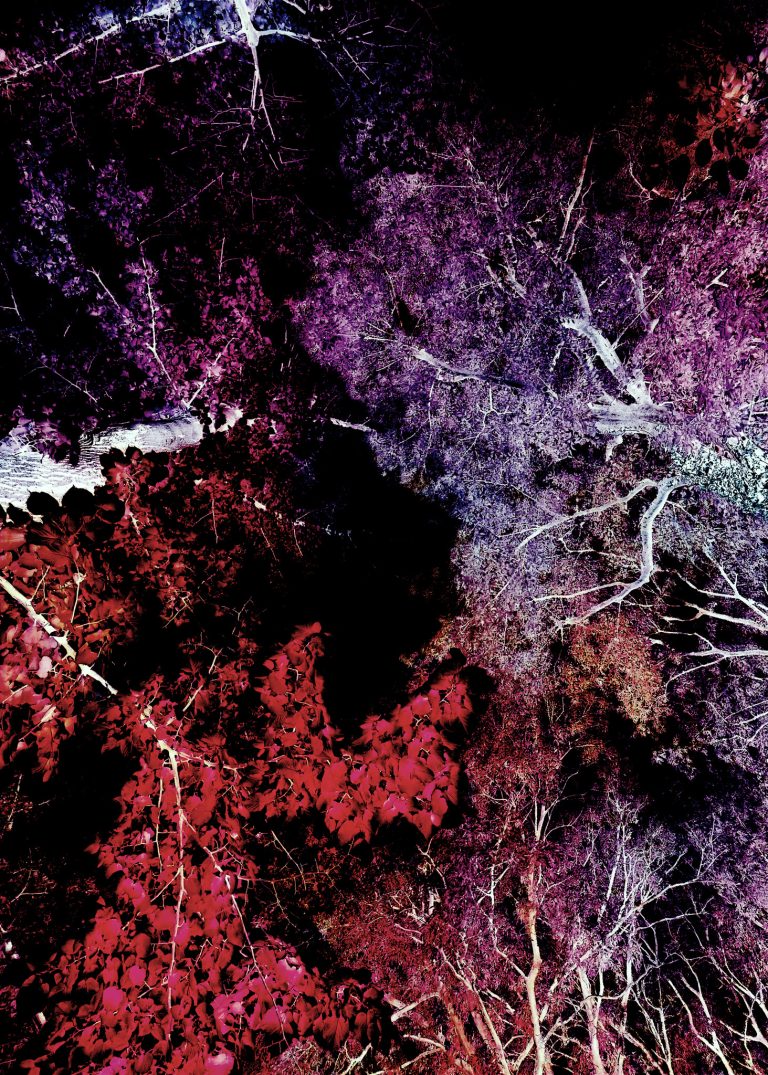
Standing in front of Empor (Upward) — 1929, Kandinsky — I stayed still for twenty minutes. I was moved to tears. I didn’t yet know exactly why. I only knew that something in that canvas was telling me something true about how my mind works. That was my opening. The moment I understood that I could exist as an artist. -
What Do You See?
A vernissage. My works on the walls. Someone stops in front of one, looks for a long moment, and asks: what is this? — meaning: what am I looking at?
The question is reasonable. The works are often difficult to place: they look like paintings but are not paintings, or they are photographs of something that tends to play with perception. The viewer’s category system fails, and they ask for a label.
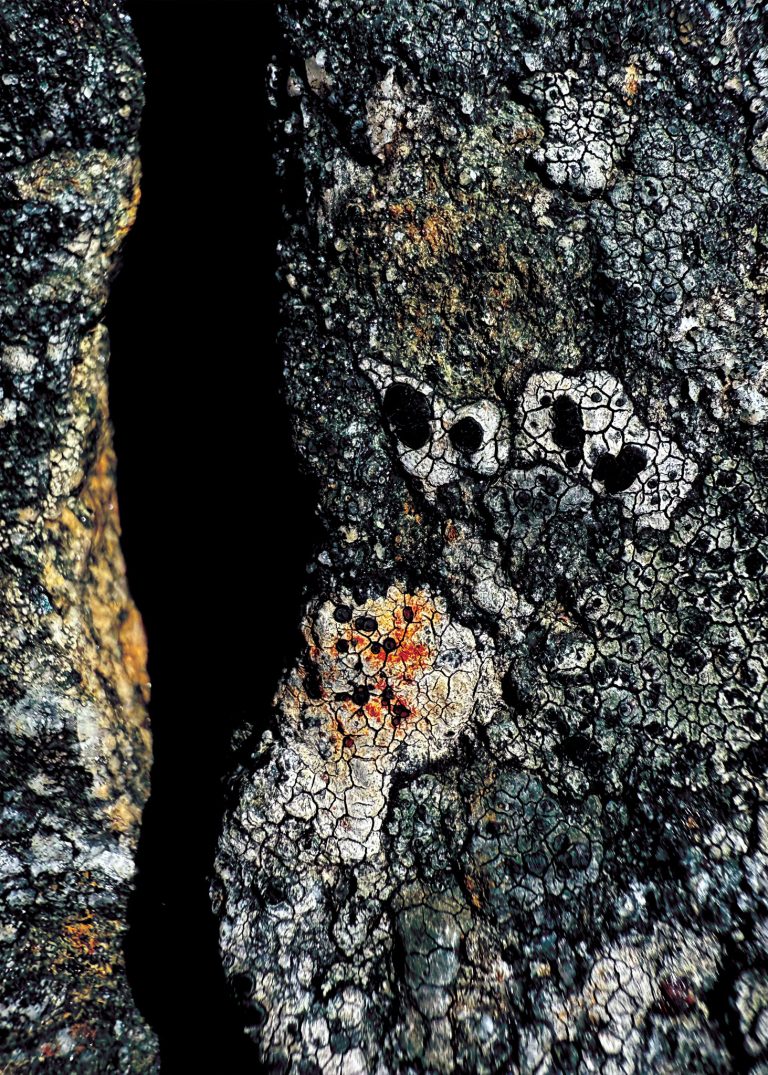
I rarely give one. Instead I turn the question around. In Italian: tu cosa ci vedi? — cos’è per te? — secondo te cos’è? In English, simply: what do you see? The wording varies; the gesture is the same. I do not want to tell them that this is a door on the Zattere in Venice photographed in close-up. I want to know what they see.
-
-
-
On Editions: A Variable System
My works are digital by nature, which means they are technically infinite. A file doesn’t wear out, doesn’t degrade, doesn’t exist in just one place. Create editions of this kind of work is a declared choice: a positioning, a statement of value. I use a Variable Edition system — marked on the Certificate of Authenticity as EV….
-
A Century of Conversations: Where My Work Stands
Every practice exists in relation to what came before it. This is not a limitation — it is the condition that makes dialogue possible. These are the conversations my work is part of, and the specific contributions I am trying to make to each of them.
-
Schrödinger’s Hybrid: The Collapse of the Aesthetic Wave Function
Before the artist’s gaze, the hybrid does not exist.
This is the radical claim of quantum mechanics applied to generative art: that the output of the algorithm, before selection, occupies a state of superposition. It is simultaneously signal and noise, masterpiece and failure, coherent form and entropic drift. The wave function has not yet collapsed. The work is alive and dead at the same time, in the precise sense that Schrödinger intended when he placed his cat in the box.
The artist opens the box. -
The Incomplete Hybrid: Gödel and the Axiom of Choice
The algorithm is a closed formal system.
It operates according to rules I designed, applies them with mathematical precision, and produces output that is entirely consistent with its own internal logic. It generates hundreds of variations from a single seed. It couples Progenitors to produce Hybrids. It runs without contradiction, without error, without ambiguity.
And it cannot tell me which of its outputs is meaningful.